Wall Street Logic
  • Home
  • Metals and Mining
  • Crypto
  • Alternative Investments
  • Financial Literacy
  • AI
  • Featured Companies
    • Apollo Silver Corp.
    • Stallion Uranium Corp.
    • West Point Gold Corp.
No Result
View All Result
Wall Street Logic
  • Home
  • Metals and Mining
  • Crypto
  • Alternative Investments
  • Financial Literacy
  • AI
  • Featured Companies
    • Apollo Silver Corp.
    • Stallion Uranium Corp.
    • West Point Gold Corp.
No Result
View All Result
Wall Street Logic
No Result
View All Result

Bitcoin Miners Abandon Crypto for AI: The Great Infrastructure Pivot of 2024-2025

Wall Street Logic by Wall Street Logic
December 9, 2025
in Crypto
Reading Time: 7 mins read
Bitcoin Miners Abandon Crypto for AI: The Great Infrastructure Pivot of 2024-2025

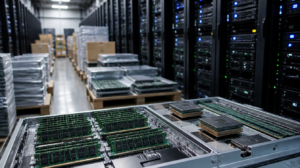
A glimpse inside the ultra-secure data centers powering the digital age.

2
SHARES
33
VIEWS
Share on FacebookShare on TwitterShare on LinkedIn

In June 2024, a sprawling industrial complex on the outskirts of Corsicana, Texas, represented the cutting edge of cryptocurrency mining ambitions. Riot Platforms, the facility’s owner, was in the midst of constructing what was slated to become the world’s largest bitcoin mining operation. Bright yellow excavators tore at the earth while flatbed trucks moved construction materials across the expansive site. A massive hangar-like structure with a pristine white roof stretched hundreds of meters along the property’s perimeter, symbolizing the seemingly limitless potential of industrial-scale cryptocurrency mining.

You might also like

Bitcoin’s Dramatic Decline: How Cryptocurrency Lost Over 30% After Trump’s Pro-Crypto Rally Fizzled

Winklevoss Twins Discuss Bitcoin’s Future, Zcash Privacy and Gemini’s Expansion Plans

BlackRock’s Crypto Chief on Institutional Adoption, Market Cycles, and the Path Forward for Digital Assets

Fast forward just eighteen months, and the facility’s destiny has undergone a dramatic transformation. Approximately two-thirds of the complex is now being repurposed to accommodate artificial intelligence and high-performance computing workloads. Rather than serving as a monument to bitcoin mining, the facility is evolving into what industry observers are calling an AI megafactory, a shift that encapsulates a broader revolution sweeping through the cryptocurrency mining industry.

The Industry-Wide Transformation

The Corsicana facility’s evolution from crypto mine to AI powerhouse is far from an isolated incident. Across the United States, a remarkably similar pattern has emerged at bitcoin mining operations owned by numerous companies. Over the past eighteen months, at least eight publicly traded bitcoin mining companies have announced plans to pivot either partially or completely toward artificial intelligence operations. This growing list includes industry heavyweights such as Bitfarms, Core Scientific, Riot, IREN, TeraWulf, CleanSpark, Bit Digital, MARA Holdings, and Cipher Mining.

The transformation reflects intense demand from AI companies for data centers capable of handling the extraordinarily energy-intensive computational workloads required to train sophisticated artificial intelligence models. In a twist of irony, large-scale bitcoin mining firms—which inadvertently contributed to enabling the AI boom by investing billions of dollars in data center infrastructure—now find themselves being displaced by the very industry they helped make possible.

Meltem Demirors, general partner at venture capital firm Crucible Capital, which invests in companies operating in the crypto, compute, and energy sectors, offers a succinct analysis of the situation. “Bitcoin mining created the blueprint for the AI compute boom and the modern data center,” she explains. “They have found that their cost of capital is much lower if they go into the AI narrative. They have the powered shell, they’re ripping out the [mining machines], and their tenant is bringing the GPUs.”

Understanding the Perfect Storm

To comprehend why bitcoin miners are abandoning their core business, it’s essential to understand the economics of cryptocurrency mining. Mining companies compete to solve complex computational puzzles, with the winner earning the right to process a batch of bitcoin transactions and claim the associated reward. The profitability of any mining operation depends on three critical variables: the current price of bitcoin, the amount of computational power being deployed across the network, and the cost of electricity to power the specialized mining hardware necessary to remain competitive.

Recent years have witnessed dramatic shifts in all three factors, creating what industry insiders describe as a perfect storm threatening the viability of all but the most efficient mining operations. Hardware advances have triggered an exponential increase in competition on the bitcoin network, meaning that winning a bitcoin reward now requires vastly more computational power than in previous years. Compounding this challenge, the reward itself was cut in half during 2024—part of a pre-programmed halving that occurs roughly every four years—dropping to just 3.125 bitcoin per successful block.

Against this challenging backdrop, bitcoin’s price has experienced significant volatility. The cryptocurrency has declined to approximately $85,000, representing a 30 percent drop from its 2025 peak, further squeezing profit margins for mining companies already struggling with increased competition and reduced rewards.

Charles Chong, Vice President of Strategy at crypto advisory firm BlockSpaceForce and former Director of Strategy at bitcoin mining company Foundry, paints a stark picture of the current environment. “The economics are terrible today,” he states bluntly. “If I buy a bitcoin mining machine today, I don’t know if I can make the money back.”

Research from crypto investment firm CoinShares reinforces this pessimistic assessment. As of mid-November, only a tiny minority of the largest publicly traded bitcoin mining companies remained profitable at the prevailing bitcoin price.

The AI Alternative

In stark contrast to the challenging economics of bitcoin mining, the artificial intelligence market offers mining companies something far more attractive: superior profit margins and predictable revenue streams formalized in multi-year contracts with major technology firms. The financial opportunity has proven irresistible. In just the past few months, publicly traded bitcoin mining companies have collectively announced more than $43 billion worth of AI and high-performance computing contracts, according to CoinShares research.

Ben Gagnon, CEO of bitcoin mining company Bitfarms, which recently announced plans to transition entirely to AI and high-performance computing by 2027, acknowledges that bitcoin mining remains technically profitable. However, he explains the economic calculus driving the industry’s transformation: “It’s that HPC creates so much more value per unit of energy and does so predictably for years into the future that the company can’t justify further investment into bitcoin mining.”

Public market investors have enthusiastically rewarded mining companies making the pivot to artificial intelligence, driving substantial increases in stock valuations. Charles Chong offers his perspective on the shift: “These are opportunistic guys. The reason they got into bitcoin was because they were the first to jump—they are risk-takers. They see the same opportunity now with AI.”

The Pure-Play Holdouts

Despite the overwhelming trend toward AI, some companies remain committed to so-called pure-play bitcoin mining. One notable example is American Bitcoin, a company launched by Eric Trump. When the company debuted in March, American Bitcoin was effectively spun out of Hut 8, a former bitcoin mining company that has since transitioned to operating in the AI and high-performance computing space and remains a majority shareholder. Unlike most mining companies, American Bitcoin doesn’t own any physical facilities—only the specialized mining hardware itself.

American Bitcoin has positioned itself as one of the industry’s most efficient operators. According to company president Matt Prusak, the firm can currently mine a single bitcoin at an average all-in cost of approximately $50,000, thanks to favorable electricity rates and comparatively low overhead expenses. “Efficiency is the coin of the realm,” Prusak asserts. “We’re starting to see this sorting of the industry. Operators that were not highly disciplined or truly built for bitcoin are starting to peel off.”

Technical Challenges of the Transition

Not everyone believes the transition from bitcoin mining to AI hosting will prove as straightforward as many companies anticipate. Speaking to WIRED in June 2024, Fred Thiel, chief executive at MARA—which at the time operated as a pure-play miner—expressed significant skepticism about miners’ ability to pivot seamlessly into artificial intelligence operations.

“A bitcoin mining data center is the simplest type there is,” Thiel explained. “It’s very hard for bitcoin miners to pivot to be hosts for large-scale enterprises.” His concerns centered on the vastly different operational requirements between bitcoin mining and AI workload hosting. AI clients require near-perfect uptime to train their sophisticated models continuously. However, many bitcoin miners constructed their facilities around agreements with grid operators to shut down operations during periods of peak energy demand—a practice that significantly reduces electricity costs but proves incompatible with AI training requirements.

“You have to have power 99.99999 percent of the time,” Thiel emphasized. “Miners are having to add generators and self-power-generation to make up the delta, which is very expensive.”

Despite these technical concerns, recent developments suggest that major technology companies are more confident in miners’ ability to adapt. In recent months, several former pure-play mining companies have signed hosting agreements worth billions of dollars with technology giants including Amazon, Microsoft, and Google—companies that apparently don’t share Thiel’s reservations about the technical challenges.

Interestingly, even MARA has shifted its position. By November, the company announced it had begun deploying hardware for AI workloads at one of its facilities, effectively contradicting Thiel’s earlier skepticism. The company declined interview requests to discuss the apparent reversal.

Pressure to Conform

Industry analysts predict that remaining pure-play miners like American Bitcoin will face mounting pressure to follow their peers into artificial intelligence. Meltem Demirors articulates the financial incentives driving this pressure with characteristic bluntness: “If you’re an executive of a business, your job is to drive shareholder value. If your stock pumps a hundred percent off the back of you announcing an AI deal with a hyperscaler, you’re going to fucking do it. Let’s not kid ourselves.”

Matt Prusak, however, maintains that American Bitcoin will resist this pressure and remain focused on its core mission. “You want to maximize shareholder returns, but you want to do so in a way that’s germane to your core business,” he argues. “American Bitcoin was not built as a generic data infrastructure company.”

Long-Term Implications for Bitcoin Network Security

While the pivot to AI may benefit shareholders in the near term, analysts warn that the exodus of industrial-scale miners could potentially compromise the long-term security and soundness of the bitcoin network itself. A dramatic reduction in bitcoin mining activity could theoretically increase the feasibility of what’s known as a 51 percent attack—a scenario where a malicious actor hijacks bitcoin transactions by controlling the majority of computational power directed at the network.

Currently, such an attack remains prohibitively expensive due to the massive amount of mining activity on the network. However, as the bitcoin mining reward continues its pre-programmed decline every four years, there’s growing concern that mining may eventually become economically unviable for most operators. “It’s definitely a threat—and a serious one,” acknowledges Charles Chong. “But how soon is an open question.”

The Future of Bitcoin Mining

Industry experts predict several possible scenarios for bitcoin mining’s future. One likely outcome is that mining operations will migrate to regions of the world where energy is cheapest and most abundant. MARA, for instance, has announced plans to construct a facility in Paraguay, seeking lower energy costs and less competition for power resources. As Fred Thiel explains, “The US market is more saturated from an energy demand perspective. You’re constantly competing with the AI industry for energy here.”

Another possibility is that bitcoin mining could become primarily the domain of sovereign states that have accumulated substantial bitcoin reserves and view mining as a matter of national security. Countries including Bhutan, El Salvador, and potentially the United States might continue mining operations to protect the value of their national bitcoin holdings, even if the activity proves unprofitable from a purely economic perspective.

“Maybe people will mine at a loss,” suggests Meltem Demirors, “because it’s a matter of national security.”

Conclusion

The transformation of bitcoin mining facilities into AI computing centers represents one of the most dramatic industry pivots in recent technological history. What began as the infrastructure backbone for cryptocurrency has evolved into the foundation for the next generation of artificial intelligence development. Whether this shift ultimately proves beneficial or detrimental to the bitcoin network remains an open question—one that will likely be answered in the years ahead as the industry continues its rapid evolution.


Acknowledgment: This article was written with the help of AI, which also assisted in research, drafting, editing, and formatting this current version.
Share1Tweet1Share
Previous Post

Lithium Stocks: Big Banks Foresee Major Rebound

Next Post

Understanding Collectibles as Investment Assets: A Comprehensive Guide to Alternative Investing

Recommended For You

Bitcoin’s Dramatic Decline: How Cryptocurrency Lost Over 30% After Trump’s Pro-Crypto Rally Fizzled

by Wall Street Logic
December 3, 2025
36
Bitcoin’s Dramatic Decline: How Cryptocurrency Lost Over 30% After Trump’s Pro-Crypto Rally Fizzled

The cryptocurrency market has experienced a sobering reality check in recent months, with Bitcoin plummeting more than 30 percent and Ethereum declining approximately 40 percent from their peak...

Read moreDetails

Winklevoss Twins Discuss Bitcoin’s Future, Zcash Privacy and Gemini’s Expansion Plans

by Wall Street Logic
November 19, 2025
44
Winklevoss Twins Discuss Bitcoin’s Future, Zcash Privacy and Gemini’s Expansion Plans

Cameron and Tyler Winklevoss, the twin entrepreneurs who have become prominent figures in the cryptocurrency industry, recently sat down for an interview at Bitcoin Amsterdam to discuss their...

Read moreDetails

BlackRock’s Crypto Chief on Institutional Adoption, Market Cycles, and the Path Forward for Digital Assets

by Wall Street Logic
November 12, 2025
69
BlackRock’s Crypto Chief on Institutional Adoption, Market Cycles, and the Path Forward for Digital Assets

Robbie Mitchnick, who leads cryptocurrency strategy at BlackRock, the world's largest asset manager, recently sat down for an in-depth discussion about the state of institutional adoption in crypto...

Read moreDetails

Gold Versus Bitcoin: Understanding Two Competing Safe-Haven Assets in Modern Markets

by Wall Street Logic
November 4, 2025
313
Gold Versus Bitcoin: Understanding Two Competing Safe-Haven Assets in Modern Markets

As financial markets navigate ongoing uncertainty in 2025, traders and investors are once again confronting fundamental questions about wealth preservation and portfolio protection. Shifting monetary policies from major...

Read moreDetails

Cryptocurrency Market Analysis: Immense Bitcoin Volatility Amid Mixed Signals for Digital Assets

by Wall Street Logic
October 14, 2025
66
Cryptocurrency Market Analysis: Immense Bitcoin Volatility Amid Mixed Signals for Digital Assets

The cryptocurrency market experienced significant volatility and notable developments this past week, with Bitcoin achieving a historic milestone while various digital assets faced both opportunities and challenges. From...

Read moreDetails
Next Post
Understanding Collectibles as Investment Assets: A Comprehensive Guide to Alternative Investing

Understanding Collectibles as Investment Assets: A Comprehensive Guide to Alternative Investing

Browse by Category

  • AI
  • Alternative Investments
  • Crypto
  • Featured Companies
  • Financial Literacy
  • Metals and Mining
  • Uncategorized

CATEGORIES

  • Metals and Mining
  • Crypto
  • Alternative Investments
  • Financial Literacy
  • AI

Recent Posts

  • The Financial Literacy Crisis Threatening Young Americans’ Path to Homeownership
  • Understanding Collectibles as Investment Assets: A Comprehensive Guide to Alternative Investing
  • Bitcoin Miners Abandon Crypto for AI: The Great Infrastructure Pivot of 2024-2025
  • Lithium Stocks: Big Banks Foresee Major Rebound
  • Home
  • Blog
  • About Us
  • Privacy Policy
  • Terms & Conditions

© 2024 Wallstreetlogic.com - All rights reserved.

No Result
View All Result
  • Home
  • Metals and Mining
  • Crypto
  • Alternative Investments
  • Financial Literacy
  • AI
  • Featured Companies
    • Apollo Silver Corp.
    • Stallion Uranium Corp.
    • West Point Gold Corp.

© 2024 Wallstreetlogic.com - All rights reserved.