
The United States has a debt problem that does not have a clean solution. With over $38 trillion in outstanding government debt, interest costs that now exceed $1 trillion per year, and a growing list of foreign governments actively reducing their Treasury holdings, the country faces a fiscal challenge that cannot be resolved through conventional means. You cannot cut your way out of $38 trillion. You cannot grow your way out of it fast enough to matter. What you can do, and what the historical record suggests America has done repeatedly — is devalue your way out of it.
The mechanism being assembled to execute that strategy this time is not the Federal Reserve’s balance sheet or a formal currency agreement. It is stablecoins. And the person who confirmed it was not a fringe analyst or an anonymous source. It was Scott Bessant, the United States Treasury Secretary, in testimony before Congress on February 4th, 2025.
What the Treasury Secretary Actually Said
Bessant’s testimony was direct enough that parsing it requires no particular interpretive skill. He told Congress that regulated stablecoins could widen access to the dollar for billions of people and generate a surge in demand for US Treasuries. He described the GENIUS Act, the legislative framework recently passed to regulate dollar-backed stablecoins, as an important piece of legislation for reestablishing regulation and creation of digital assets in the US and helping America assert control over the market.
Read that again carefully. The Treasury Secretary of the United States told Congress that stablecoins could be an important feature of financing the US government. That is not a speculative interpretation. That is the stated position of the official responsible for managing American fiscal policy.
The mechanism he was describing had been discussed in financial circles for some time before that testimony. Anton Kobakov, a senior economic adviser to Russian President Vladimir Putin who has served in that capacity for over a decade, had previously disclosed the outline of the plan at the Eastern Economic Forum, describing it as moving debt into what he called the crypto cloud. The idea attracted significant skepticism when it first circulated publicly. After Bessant’s congressional testimony, that skepticism became considerably harder to sustain.
The Problem This Is Designed to Solve
To understand why stablecoins have become a tool of US fiscal strategy, you need to understand the specific bind that American debt management finds itself in.
For decades, the United States has depended on foreign central banks and institutional investors to absorb the Treasury securities it issues to fund government operations. Japan, China, the United Kingdom, and others have historically been reliable buyers, parking their reserves in Treasuries because they were considered the safest and most liquid asset on earth. That buyer base is deteriorating. China has been reducing its Treasury holdings. Japan has been a net seller. A significant portion of the world is actively engaged in what economists call dedollarization, reducing dependence on dollar-denominated assets and the US-centered financial system more broadly.
When foreign demand for Treasuries declines, the market forces yields higher to attract new buyers. Higher yields mean higher interest costs on new and refinanced debt, costs that already exceed $1 trillion annually and are projected to grow substantially. This creates a compounding problem: declining foreign demand pushes yields up, higher yields increase debt service costs, higher debt service costs require more borrowing, and more borrowing requires even more foreign demand that is increasingly unavailable.
Simultaneously, the current administration has expressed a clear preference for significantly lower interest rates, a goal that, if pursued aggressively, makes US debt instruments even less attractive to yield-seeking foreign investors. The Federal Reserve chairmanship is expected to change in May, and the expectation in markets is that the incoming chair will lean toward accommodation of that lower-rate preference.
The result is something close to a perfect storm: a situation where the traditional mechanisms for managing US debt are losing effectiveness at exactly the moment when the debt burden is most acute. Stablecoins, in this context, are not primarily a financial innovation story. They are a fiscal strategy.
How the Mechanism Works
The GENIUS Act establishes a straightforward requirement: every dollar-backed stablecoin issued in the United States must be backed by US Treasuries or cash. The logic is simple but the implications are significant.
When a user anywhere in the world purchases a stablecoin, whether from Tether, Circle, or any other approved issuer, the issuer is legally required to hold an equivalent amount in US government debt. The transaction is automatic, mandatory, and built into the regulatory structure of the system.
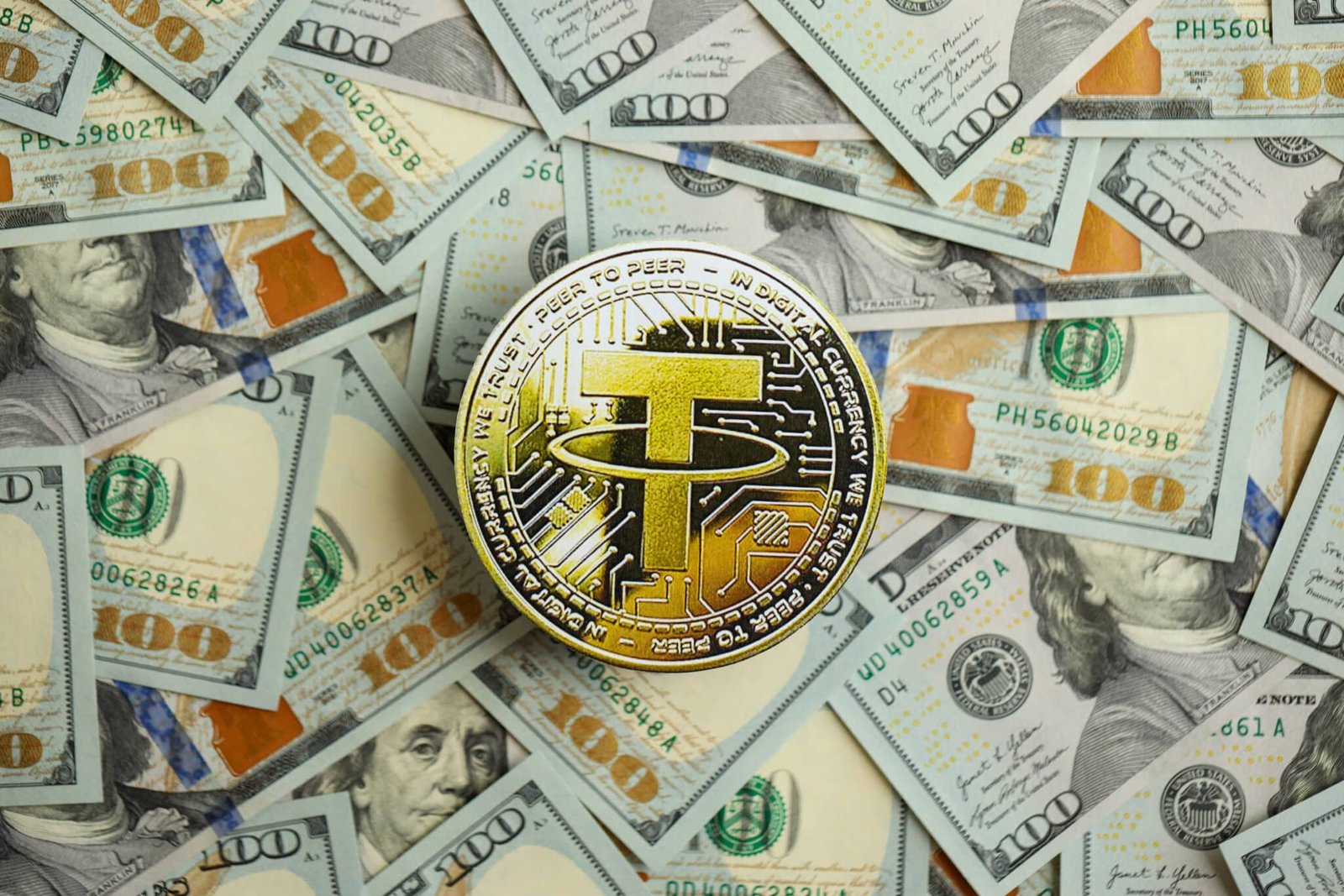
The current scale of this mechanism is already substantial. Tether, the largest stablecoin issuer, holds approximately $135 billion in US Treasuries, making it, by itself, the 17th largest holder of US government debt in the world, larger than Germany and larger than South Korea. Circle, the second largest issuer, holds approximately $55 billion. Together, two private companies have become among the most significant holders of American sovereign debt through a process that most people engaging with their products do not think about at all.
Goldman Sachs has described the stablecoin industry as being on the brink of a gold rush, estimating annual growth of approximately 40% for dollar-denominated coins through 2027. Stablecoin transaction volumes are already up approximately 50% year-over-year. Citigroup has projected that stablecoins could potentially hold more US Treasuries than any foreign country within four years.
Every person in Argentina using stablecoins to escape peso inflation is buying US Treasuries without knowing it. Every business in Turkey using USDC to avoid lira volatility is funding the American deficit without any awareness of that function. The demand is being generated globally, automatically, at scale, through the ordinary financial behavior of hundreds of millions of people who are thinking about their own currency problems rather than about American fiscal policy.
The Distribution Advantage
This is where the architecture of the strategy becomes genuinely sophisticated, and where it differs meaningfully from previous mechanisms of dollar expansion.
When the Federal Reserve conducts quantitative easing, creating money to purchase assets and expand the money supply, the process is centralized and visible. Market participants can track the Fed’s balance sheet in real time. Money supply data is published regularly. The mechanism is legible, and so is the political accountability that comes with it. There is a single institution that can be identified as the source of monetary expansion and, by extension, the erosion of purchasing power that follows from it.
The stablecoin mechanism operates differently. Tether is a private company. Circle is a private company. Apple could issue a stablecoin. Meta could issue one. A major retailer or payment processor could issue one. The issuance of stablecoins looks, on the surface, like private sector innovation: decentralized, competitive and driven by market forces rather than government policy. It does not carry the same political visibility as a Federal Reserve balance sheet expansion. It is considerably harder to point at a single institution and say with clarity that it is devaluing your savings.
Meanwhile, behind that surface appearance, every stablecoin issuer is legally required to buy Treasuries. The demand is guaranteed by statute. The distribution is global and growing rapidly. And when a devaluation of the underlying dollar occurs, the impact is not concentrated among American citizens or traditional holders of US government debt. It is distributed across every person in every country holding stablecoins as part of their daily financial lives.
The pain, in other words, gets exported. Globally! Through a system that most of its participants understand as a payments innovation rather than a mechanism of monetary policy.
A Century-Long Pattern With New Tools
The strategy being deployed is not new. What is new is the tool.
In 1933, President Roosevelt confiscated privately held gold and reset the official gold price from $20.67 per ounce to $35 per ounce overnight, effectively devaluing the dollar by roughly 70% relative to gold in a single administrative action.
In 1971, President Nixon ended the dollar’s convertibility to gold entirely, closing what was known as the gold window and untethering the dollar from any hard asset constraint. The dollar has lost approximately 85% of its purchasing power since that moment, through a combination of inflation and monetary expansion that has been ongoing for over five decades.
From 2008 onward, the Federal Reserve implemented successive rounds of quantitative easing, purchasing trillions of dollars in assets to inject liquidity into the financial system, expanding the money supply and contributing to the inflationary dynamics that have accelerated in the years since.
The pattern across all three episodes is consistent: build the mechanism, achieve adoption, activate the devaluation. The specific instruments change: gold confiscation, closing the gold window, quantitative easing, and now stablecoin infrastructure! But, the underlying logic does not and always remains the same. When the debt burden becomes unsustainable in real terms, the response is to make the currency less valuable so the debt becomes cheaper to repay. Creditors get paid back in dollars that are worth less than the dollars they lent.
The stablecoin strategy fits this pattern with one additional feature that previous iterations did not have: the liability is globally distributed in a way that is structurally resistant to coordinated exit. When US debt was held primarily by foreign central banks, those institutions could coordinate their selling, as China and Japan have demonstrated in recent years. But when US debt is backing hundreds of millions of stablecoin users embedded in payment systems across every country, coordinated exit becomes logistically impossible. The holders are too numerous, too dispersed, and too dependent on the dollar-denominated system they are using for daily transactions to exit in any organized fashion.
The Three Phases and Where We Are
The execution of this strategy appears to be unfolding in identifiable phases.
The first phase: legislation and foundation building. centered on the passage of the GENIUS Act, the establishment of regulatory frameworks for stablecoin issuers, and the approval of qualified issuers. This phase is effectively complete.
The second phase: adoption acceleration, is currently underway. Stablecoin adoption grew approximately 40% in 2025 alone. More companies are receiving approval to issue stablecoins. Integration into mainstream payment systems is expanding. Industry projections point toward a stablecoin market of $3 to $4 trillion by 2030.
The third phase: the devaluation trigger, is the endpoint of the mechanism. Once sufficient dollar-denominated stablecoin supply is distributed globally and embedded in daily financial activity, the conditions exist for a reset. That reset could take the form of sustained inflation that gradually erodes the dollar’s purchasing power, a more deliberate revaluation event, or some combination of both. The debt burden decreases in real terms. The dollar’s purchasing power decreases correspondingly. And that decrease is shared by every person and institution globally holding dollar-denominated stablecoins.
Three signals worth monitoring as this unfolds: acceleration in stablecoin adoption beyond current growth projections; announcements by major corporations of their own stablecoin issuance programs; and the appearance in official communications of language around digital dollar modernization or bringing the dollar into the 21st century, which historically functions as the public narrative framing for a significant monetary transition.
What It Means for Ordinary Investors
The framework being constructed is not inherently a crisis for investors who understand what is happening and position accordingly. Every major monetary transition in American history has created significant wealth for people who recognized the shift early and adjusted their asset allocation before the transition became obvious.
Assets that have historically held their value through dollar devaluation cycles include commodities such as oil and gold, real estate, and the equity of companies in consumer staples and energy sectors, categories that tend to maintain or increase their prices in nominal terms even as the currency’s purchasing power declines. These are not exotic instruments. They are the same categories that outperformed during the 1970s inflation, the commodity cycle of the 2000s, and the post-2008 period of sustained monetary expansion.
The stablecoin mechanism does not change this fundamental dynamic. It repackages it in a new set of tools and distributes the impact more broadly than previous iterations. But the underlying logic, that dollar devaluation benefits hard assets and commodities relative to cash and fixed-income instruments, holds as it has through every previous cycle.
Understanding the mechanism is the first step. Positioning accordingly is the second. And the time to do the second, as history consistently demonstrates, is before the transition becomes the subject of mainstream financial coverage rather than congressional testimony that most people did not notice.