
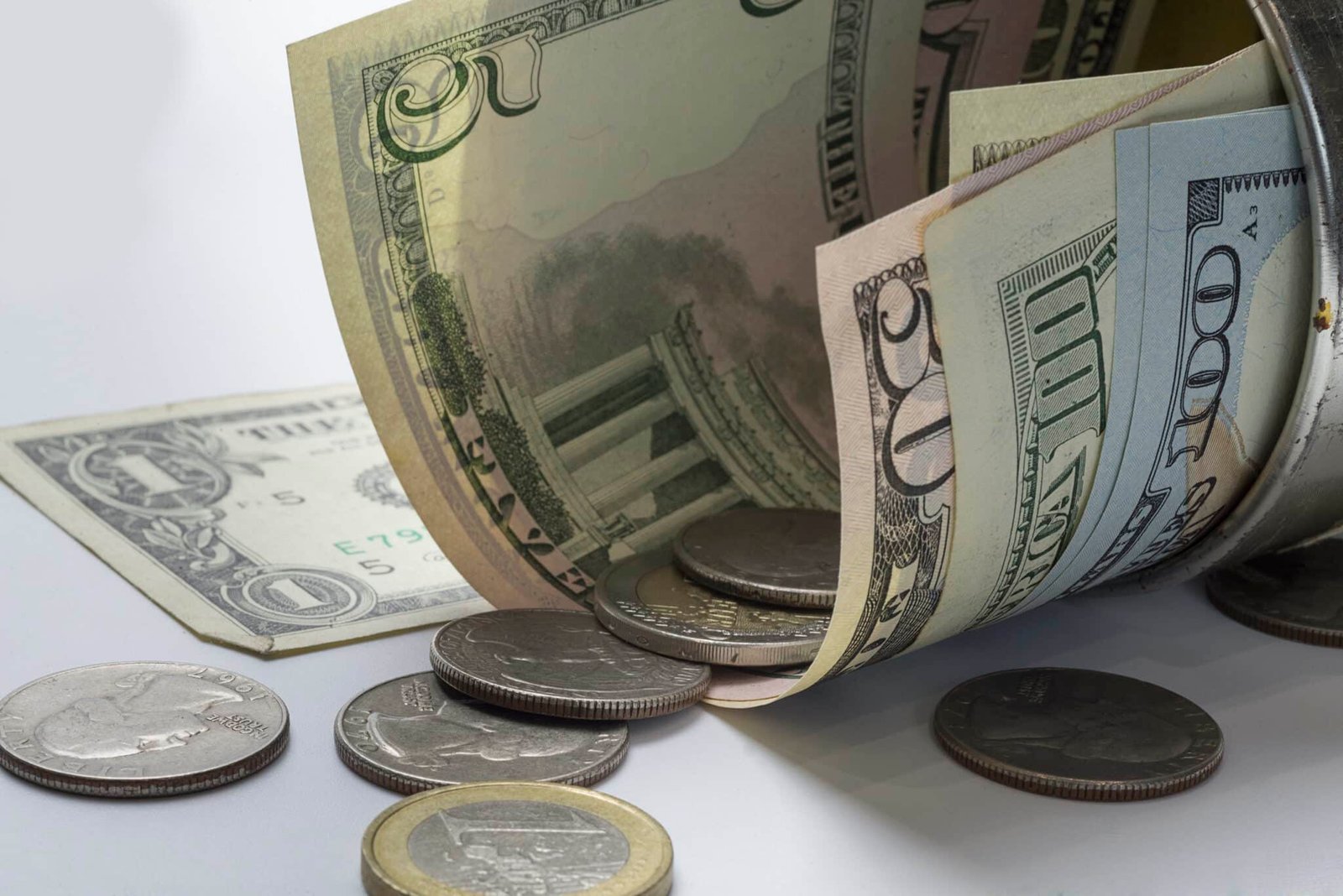
There is a question almost nobody asks anymore, and it is a useful one. What, precisely, is a dollar?
For most of American history the answer was specific. The Coinage Act of 1792 defined the dollar as 371.25 grains of pure silver. Not a promise. Not a value. A weight. You could, in theory, put a dollar on a scale and confirm it. Money was a physical thing measured against another physical thing, and the relationship between the two was written into law.
That definition held in some form for nearly eighty years. Then it did not. And the story of how money went from being a measurable quantity of metal to being a number on a screen backed by trust in a government is the story most people have never been told. It matters because the metal that anchored that original system has not gone anywhere. It is still being mined, still being consumed, still being argued over by central banks and industrial buyers and a small population of investors who pay attention. And right now, by every reasonable measure available, silver is in the middle of one of the more interesting setups it has had in modern memory.
The Real Money of Civilisation
Silver was used as money long before gold was. The Sumerians were trading silver as a medium of exchange around 3,000 BCE, more than a thousand years before written currency standards became common. Silver predated gold as everyday money for one simple reason. There was enough of it. Gold was too rare to settle small transactions. You could not make change for a loaf of bread with a piece of gold. Silver could be coined, weighed, and circulated at scales that an actual economy required.
The most important currency in world history, by reach and duration, was not the British pound or the United States dollar. It was the Spanish silver dollar, the real de a ocho, what Anglo-American sailors called the piece of eight. It circulated globally from the 1500s through the 1800s and was legal tender in the United States until 1857. The American dollar takes its name from this coin. The currency that ran the world for three centuries was a chunk of silver minted in Mexico and Peru.
When Hamilton drafted the Coinage Act, he designed a bimetallic system on purpose. Gold and silver were both legal tender at a fixed ratio. Hamilton understood that an economy needs enough money to grow, and that gold alone could not provide it. Silver was the working money of the country. Gold was the store of value. Both were anchored to weight, and weight could not be inflated away by political convenience.
The Crime of 1873
The bimetallic system in the United States lasted until the Coinage Act of 1873, which removed the silver dollar from legal tender. The country shifted to a gold-only standard. Populist historians have long called this the Crime of 1873, and the political fight that followed defined a generation of American politics. The argument cuts both ways. Defenders of the move argued that international markets were already moving to gold and that the United States had little choice. Critics argued that a small group of creditors and bankers benefited enormously from the contraction of the money supply that followed, while farmers, debtors, and the western mining states were ruined. William Jennings Bryan’s Cross of Gold speech in 1896 was a direct response to this fight. He lost the election, but the populist anger he channelled was not invented for political theatre. The economic consequences of demonetising silver were real and broadly distributed.
The final separation of the dollar from any precious metal came in 1971, when the Nixon administration ended the convertibility of dollars to gold. The system that replaced it is the one we live in now. The dollar is backed by trust, by tax revenue, and by the credibility of the institutions that issue it. That is not a criticism. It is a description.
The Setup in 2026
Here is what makes the current moment unusual. According to the Silver Institute’s World Silver Survey, the global silver market has run a structural deficit every year from 2021 through 2025. The deficit reached 148.9 million ounces in 2024, with a 2025 forecast of roughly 95 to 117 million ounces. The cumulative shortfall over those five years comes to approximately 800 million ounces, which is close to a full year of global mine production.
That deficit has been absorbed from somewhere. ETF holdings, exchange warehouses, and above-ground stockpiles have been drawn down to fill the gap. Industrial fabrication demand reached a record 680.5 million ounces in 2024, the fourth consecutive year of record industrial demand. The drivers are not mysterious. Photovoltaic solar installations require silver in quantities that scale with global solar capacity. Electric vehicles require more silver per unit than internal combustion vehicles. Data centres, including the AI build-out that has dominated capital expenditure narratives over the last two years, require silver in their thermal management and electrical systems. In 2025, the United States government formally added silver to its critical minerals list.
Roughly sixty percent of silver demand is now industrial. Gold is closer to ten percent. This is the most important difference between the two metals from an investment perspective. Gold is hoarded. Almost every ounce of gold ever mined still exists somewhere, in a vault or a piece of jewellery or a central bank reserve. Silver is consumed. It goes into devices in microgram quantities, distributed across billions of products, and most of it is never recovered. The cost of extracting a few milligrams of silver from a circuit board exceeds its value at almost any plausible price.
The Supply Problem Nobody Can Fix Quickly
The supply side is where the structural argument gets genuinely difficult to dismiss. Roughly seventy percent of global silver production is a by-product of mining for something else, primarily lead, zinc, copper, and gold. Primary silver mines, where silver is the main commercial product, account for less than thirty percent of supply. This means silver production decisions are not made by silver miners responding to silver prices. They are made by base metal companies responding to base metal prices.
Silver could trade at one hundred dollars an ounce or two hundred dollars an ounce, and the major producers cannot meaningfully increase output unless the underlying base metal economics also justify it. New primary silver mines exist, but the timeline from discovery to production is typically ten to fifteen years between exploration, permitting, environmental review, and construction. Whatever the deficit looks like in 2026, the supply response will not arrive in 2026. Or 2027. Or likely 2028.
How Professionals Read the Setup
There is a single ratio that experienced precious metals investors watch more closely than almost any other. It is the gold to silver ratio, calculated by dividing the gold price by the silver price. The number tells you how many ounces of silver it takes to buy one ounce of gold. The historical average over the last several decades has run between fifty and seventy. In April 2025 the ratio peaked at 107, an extreme reading that historically signals silver is unusually cheap relative to gold. By October 2025 it had fallen to 78 as silver rallied, with most of the move happening in a few months. Silver more than doubled in 2025, briefly trading above sixty dollars per ounce.
The ratio does not predict short-term moves. What it does is provide a long-running benchmark against which silver can be evaluated. When the ratio is high, silver tends to be in an accumulation phase. When the ratio is low, silver has historically outperformed gold meaningfully and the risk-reward begins to invert. This is not an investment recommendation. It is a tool. Like any tool, it works best when the person using it understands what it actually measures.
What Could Go Wrong
Silver is volatile. Thirty to fifty percent drawdowns are common in its history. The 1980 peak above forty-eight dollars was followed by a multi-decade bear market. The 2011 peak near fifty dollars took fourteen years to recover. Anyone buying silver should understand that volatility is the price of admission, not a bug to be engineered around.
There are also legitimate longer-term risks. Industries can substitute. Solar manufacturers have already reduced silver loadings per panel by roughly thirty percent over the last decade through engineering changes. If silver prices rise far enough, the incentive to find substitutes accelerates. Copper nanowires and other alternatives are being researched. None of them currently match silver’s combination of conductivity, thermal performance, and reflectivity at competitive cost, but at high enough prices the engineering economics shift.
Silver is also sensitive to monetary policy in ways that gold is not. A strong US dollar makes silver more expensive for foreign buyers and tends to depress demand. Higher real interest rates increase the opportunity cost of holding non-yielding assets. If the Federal Reserve maintains a restrictive policy stance for longer than markets currently expect, silver will feel it.
The Bottom Line
Silver is not a get-rich-quick play. It is not a religion. It is a metal with an unusual dual identity, sitting at the intersection of monetary history and modern industrial demand, with a supply structure that cannot respond quickly to price signals and a deficit that has now run for five consecutive years. The Silver Institute is forecasting a sixth consecutive deficit in 2026. None of that guarantees future returns. Markets do not care what is structurally true if positioning, sentiment, and policy push in another direction.
What the setup does suggest is that anyone who holds dollars should at least understand what silver is, why it once defined the dollar, and what changed when that definition was removed. The dollar in your pocket used to have a name. It does not anymore. Silver still does.
______________________________________________________________________________________________________
This article is written for educational and informational purposes only and does not constitute financial or legal advice. The views and analytical frameworks presented draw on publicly available information and reported commentary from industry participants. Readers are encouraged to consult primary sources and form their own informed views on these complex topics.