
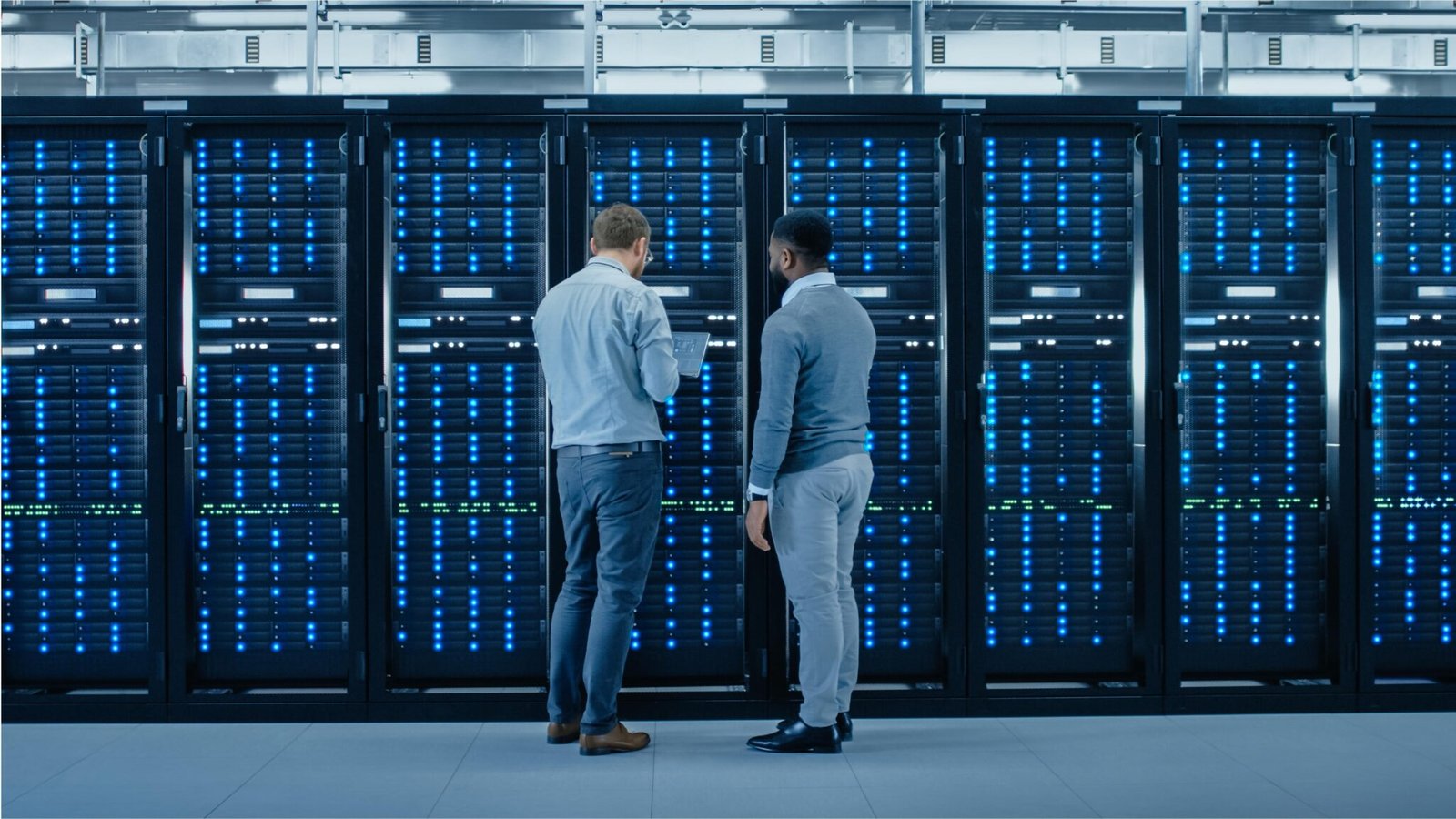
Every few years a single theme swallows the imagination of private capital, and right now it is a building with no windows, humming with servers, drinking electricity by the gigawatt. The data center has become the most fashionable asset on earth. Pension funds, private equity giants, insurers, sovereign wealth funds, and increasingly ordinary investors are all trying to find a way in. The numbers attached to the buildout have stopped sounding like finance and started sounding like science fiction. So before you decide whether this is the opportunity of the decade or the setup for a painful hangover, it helps to understand what is actually being financed, and with whose money.
The supercycle, by the numbers
Start with the scale, because the scale is the whole story. Goldman Sachs has estimated that roughly $7.6 trillion of capital could flow into compute, data centers, and power between 2026 and 2031. In a single year, the picture is just as striking. BloombergNEF pegged combined capital spending by the fourteen largest publicly owned data center operators at close to $750 billion in 2026, up from under $450 billion the year before. Total data center investment in 2025 ran close to $500 billion and is expected to reach roughly $650 billion this year, according to figures reported by S&P Global.
What makes this an alternative investments story rather than just a tech story is where the money is coming from. The hyperscalers, the Microsofts and Googles and Metas of the world, can fund a lot from their own cash flow, but not all of it. The rest is increasingly being pulled from private markets. S&P Global reported that private infrastructure funds collected a record sum of more than $250 billion in commitments in 2025, more than double the prior year. As of May, there were nearly 700 infrastructure funds out raising money, targeting an aggregate of roughly $555 billion. Private equity investment specifically into US data centers tripled in a year, jumping to about $45 billion in 2025 from under $14 billion the year before.
That is a remarkable rotation. For most of the last decade, infrastructure investing meant toll roads, airports, pipelines, and renewable power, the boring assets that throw off steady cash. Digital infrastructure has now muscled its way to the front of the line, and it is dragging power generation along with it, because a data center is useless without electricity to run it.
Why power, not money, is the bottleneck
Here is the twist that surprises people. The constraint on this boom is not capital. There is plenty of capital. The constraint is electricity. US data center power demand is projected by some analysts to reach 35 to 45 gigawatts by 2030, roughly double the level of 2024. Connecting a new facility to the electrical grid can take up to four years, which in the timeline of an AI arms race is an eternity. That delay is why you keep hearing about developers chasing their own power, signing deals for natural gas turbines, and reviving interest in nuclear, including the small modular reactors that have been promised for years and rarely delivered.
This is why the smart money increasingly talks about the data center and the power plant as a single investment. The returns do not come from the silicon alone. They come from owning the land, the building, the cooling, the fiber, and the megawatts, the unglamorous physical layer underneath the artificial intelligence everyone is excited about. It is a classic infrastructure proposition wearing a futuristic costume, and that framing is exactly what makes it attractive to the long-horizon institutional investors who like predictable, contracted cash flows.
How everyday investors are being let in
For most of this boom, the juiciest exposure has been locked behind institutional doors. That is changing. Hamilton Lane has rolled out a private infrastructure fund designed to give individual investors access to assets that used to be reserved for its institutional clients. In Europe, EQT launched an evergreen infrastructure vehicle, structured as an ELTIF, aimed squarely at individuals who want a slice of private markets without a traditional ten year lockup. These evergreen and semi-liquid structures are the industry’s attempt to package illiquid assets in a wrapper retail investors can actually buy and, within limits, sell.
If you would rather stay in public markets, there are now exchange-traded funds built around exactly this theme. Some focus on data center real estate and digital infrastructure, holding the specialized REITs that own the buildings. Others, like funds branded around AI and power infrastructure, reach further into the electrical supply chain, the grid equipment makers, the utilities, and the companies trying to solve the energy bottleneck. These trade like any stock, which means daily liquidity and transparent pricing, a meaningful contrast to the private funds. The tradeoff is that you are buying companies the whole market can see and price, so the easy, mispriced gains, if there ever were any, have likely been competed away.
Should the typical reader of this column be piling in? That is not a question anyone can answer for you, and the honest truth is that the answer depends entirely on what you already own and how much volatility you can stomach. The point worth making is simpler. The access exists now in a way it did not two years ago, through both private wrappers and public funds, and access is not the same thing as a sure thing.
The warning lights on the dashboard
Now for the part the marketing decks tend to underplay. A boom financed increasingly with debt and complex structures has a way of ending badly, and serious people are starting to say so out loud.
The financing is getting opaque. Big technology companies are leaning on private equity, private credit, and growing piles of debt to fund the buildout, and some of the arrangements have a circular quality that has made veteran investors uneasy. When OpenAI signed enormous infrastructure commitments despite comparatively modest revenue, analysts speaking to CNBC compared the structure to the vendor financing that inflated the dot-com bubble in the late 1990s, where suppliers effectively lent customers the money to buy their products. That comparison should give anyone pause, because that particular movie did not have a happy ending.
The concern has reached Washington. Earlier this year, a group of US senators publicly urged regulators to examine how the largest technology firms are turning to what they called complex and opaque debt markets to borrow staggering sums. Their warning was blunt, that heavy debt loads in the sector could produce destabilizing losses for financial institutions and ripple out into the broader economy. Whether that fear is overblown or prescient, it tells you the smart consensus is no longer uniformly bullish.
And there is the oldest risk of all, which is demand. The entire edifice rests on the assumption that the appetite for artificial intelligence computing keeps growing fast enough to fill all these buildings and justify all these megawatts. If that demand merely slows, or if a cheaper way to train and run models emerges, a lot of very expensive, very specialized real estate could sit half empty. Infrastructure assets are supposed to be safe precisely because their cash flows are durable. A data center whose anchor tenant retrenches is not nearly as safe as a toll road.
None of this means the supercycle is a mirage. The buildout is real, the demand so far is real, and the physical assets have genuine value. But when an entire industry agrees that something cannot lose, that is usually the moment to read the fine print twice, ask exactly what you are being sold, and size any position so that being wrong is survivable. The most powerful trend in markets is still subject to the most ordinary rule, which is that price and value are not the same, and the gap between them is where investors get hurt.
________________________________________________________________________________________________________
This article is written for educational and informational purposes only and does not constitute financial or legal advice. The views and analytical frameworks presented draw on publicly available information and reported commentary from industry participants. Readers are encouraged to consult primary sources and form their own informed views on these complex topics.