
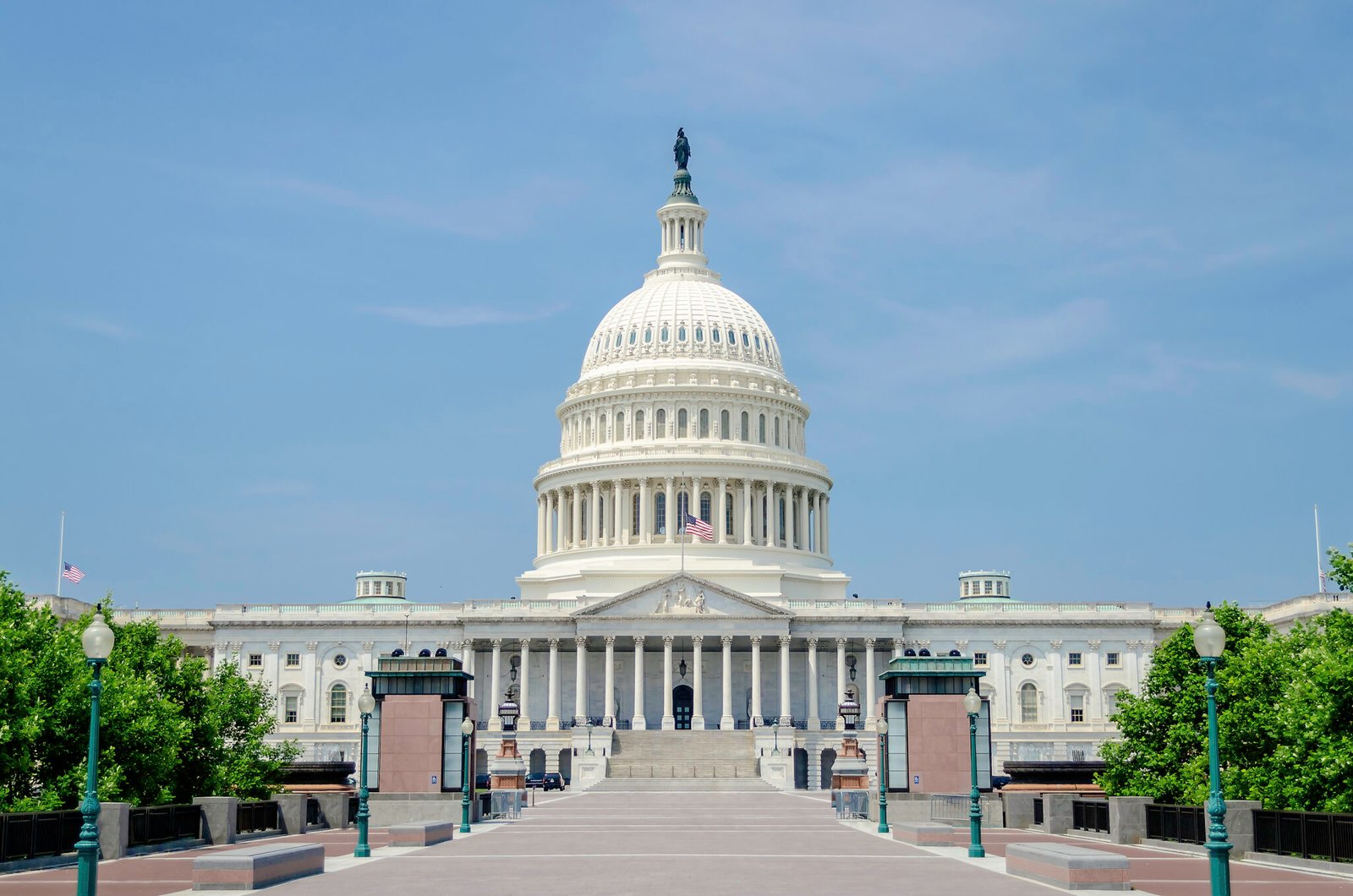
On September 15, at 2:15 in the afternoon, the United States Senate becomes eligible to vote on whether it is allowed to debate a crypto bill. Not whether to pass it. Whether to discuss it. That is what a cloture vote on a motion to proceed actually is, and if the phrasing sounds like parliamentary theater, consider that prediction markets have been pricing the odds of the Digital Asset Market Clarity Act becoming law this year at roughly 19.5 percent, according to CCN. Coinbase chief executive Brian Armstrong has said publicly he expects it to pass. Traders are betting against him by a margin of four to one. Somebody is badly wrong, and the more interesting question is what happens to digital asset markets in either case, because the answer is probably not what the headlines will tell you on the sixteenth.
What Is Actually On the Floor
The CLARITY Act has been grinding through Congress for over a year. The House passed its version, H.R. 3633, on July 17 of last year by 294 votes to 134, and more than 70 Democrats crossed the aisle to support it. That is not a partisan margin. That is a coalition. The Senate Banking Committee then advanced its own substitute 15 to 9 on May 14 of this year, and on July 22 Senate Republicans released updated text that merges the Banking Committee work with the Senate Agriculture Committee’s Digital Commodity Intermediaries Act, preserving the core frameworks of both.
So why has nothing cleared the floor? Because 53 Republicans is not 60. Seven Democratic votes have to come from somewhere, and the price of those votes has been consistent and specific. Democrats want stronger ethics and conflict of interest provisions governing how much elected officials and their families can hold in digital asset ventures. They want tighter illicit finance safeguards. And there is an unresolved fight over whether stablecoin issuers and their distribution partners can pay yield or rewards to holders, which the banking lobby views as deposit competition dressed up in new clothes. Banking trade groups have argued the existing stablecoin regime does not go far enough to protect their franchise.
None of those are small asks. All of them are negotiable. That is the frustrating shape of this thing. It is not a philosophical impasse, it is a haggle, and haggles have a habit of running past deadlines.
Meanwhile, the SEC Stopped Waiting
Here is the part that gets lost in the vote counting. While Congress has been stuck, the Securities and Exchange Commission has been quietly building most of the framework anyway, and it has moved faster in eight months than the legislature has in eighteen.
Start with March 17, when the Commission issued an interpretive release establishing a token taxonomy. It sorted digital assets into categories: digital commodities, digital collectibles, digital tools, payment stablecoins, and digital securities. Dry stuff. Also the single most consequential document the agency has produced on this subject, because for a decade the entire industry’s legal exposure hinged on a question nobody would answer in writing, which was what kind of thing a token is.
Then on August 18 the Commission went further and proposed Regulation Crypto Assets, a genuine rulemaking rather than a speech or a no-action letter. The proposal would create tailored exemptions from Securities Act registration for token offerings. A startup exemption would let issuers raise up to 5 million dollars over a four year period. A broader fundraising exemption would permit up to 75 million dollars in any twelve month window, with real strings attached, including audited financial statements and ongoing reporting obligations. And buried in the proposal is a conditional safe harbor from the term investment contract itself. Chairman Paul Atkins described it as applying once an issuer has completed or permanently abandoned the essential managerial efforts it promised to undertake.
Read that again, because it is the whole ballgame. It means a token can start life as a security and stop being one. The Commission has spent years insisting that classification is permanent, and the industry has spent years insisting the opposite. The proposal splits the difference in the industry’s favor, with conditions. Atkins has been blunt about the prior era, calling it regulation by enforcement and an attempt to fit a square peg in a round hole.
The Commodity Futures Trading Commission has been busy too. On May 29 it issued guidance approving cryptoasset perpetual futures for regulated venues, a product class that until then lived almost entirely offshore precisely because nobody in Washington would bless it. Perpetuals are where the real volume in crypto derivatives has always been. Bringing them onshore is not a symbolic gesture.
Why Prices Have Barely Cared
Bitcoin traded near 78,500 dollars on Sunday, having touched above 80,000 during August before easing back. Ether sat around 2,450. Both moved sharply higher on August 20 after President Trump publicly urged Congress to pass the bill, and both moved higher again in the days following the SEC proposal. Then both gave a good chunk of it back. That is a market treating regulatory news as a trading catalyst rather than a repricing event, which is a reasonable thing to do when you have been promised legislation four times and received it zero times.
Flows tell a similar story with more nuance. United States spot bitcoin exchange traded funds pulled in roughly 3 billion dollars during a nine session stretch from August 17 through August 28, making August the strongest month for those products all year. Then on August 28 the streak snapped with 201.8 million dollars of net outflows. Ether funds, notably, kept taking money in, extending their own streak to a tenth session, and Solana products drew fresh capital as well. So institutional demand is real, it is broadening past bitcoin, and it is also fickle enough to reverse in a day.
The lesson buried in that sequence is one worth holding onto. ETF inflows are a demand signal, not a price guarantee. Three billion dollars arrived and bitcoin still ended the month below where it traded at the peak of the inflow surge. Anyone telling you flows mechanically produce gains is selling something.
The Case for Caring Anyway
If the SEC is doing the work regardless, does the September vote matter? Yes, though not for the reason most commentary suggests, and the difference is worth understanding if you hold any of this.
Rulemaking is reversible. Everything the Commission has proposed this year can be unwound by a future Commission with a different chairman and a different majority, through the same notice and comment process that created it. Interpretive releases are even softer. Legislation is durable in a way that agency action simply is not, and durability is what determines whether serious long horizon capital, pension money, insurance money, corporate treasury money, treats digital assets as an allocation or as a trade. A framework that expires with an administration is not a framework, it is a lease.
There is also the jurisdictional question that no rulemaking can settle. The CLARITY Act divides authority between the SEC and the CFTC. Only Congress can draw that line with finality. Absent statute, you get two agencies with overlapping claims and a decade of litigation to sort out which one was right, which is roughly the situation the industry has already endured and has no appetite to repeat.
So what should a reasonable investor take from September 15? Mostly this: watch the vote count rather than the outcome. If cloture fails with 55 or 57 votes, the bill is close and the negotiation is live, and the failure is a scheduling problem rather than a substantive one. If it fails at 51, the coalition that produced 294 House votes has broken down and the timeline extends well past this Congress. The number is the information. The pass or fail headline is not.
And if it clears? Then the Senate begins debating, amendments start flying, and the same ethics and stablecoin yield fights play out in public over weeks. Passage of cloture is the start of the hard part, not the end of it. Anyone who tells you a green light on the fifteenth means the bill is done has not watched the Senate work.
The market has spent this year learning to price crypto on flows, macro, and positioning rather than on Washington. That is a healthier place to be than the alternative. But the regulatory question has not gone away, it has just moved from the front page to the foundation, and foundations matter most precisely when you have stopped thinking about them.
This article is written for educational and informational purposes only and does not constitute financial or legal advice. The views and analytical frameworks presented draw on publicly available information and reported commentary from industry participants. Readers are encouraged to consult primary sources and form their own informed views on these complex topics.