
Ten weeks. That is how long copper climbed on the London Metal Exchange without a losing week heading into Friday’s close, according to Bloomberg, the longest such run since 1994. The easy explanation is the one everybody reaches for, which is Washington. Traders have spent the better part of eighteen months shoveling metal into American warehouses ahead of a tariff decision that still has not arrived, and that arbitrage has warped price signals across three continents. The story is real. It is also, at this point, the least interesting thing happening in copper.
The more interesting number is a production number, and it is going the wrong way.
The number nobody was forecasting in January
International Copper Study Group data show that global copper mine output fell 1.1 percent in the first half of 2026. Read that again, because it is genuinely strange. Copper spent the first half of the year trading at or near all time highs. The LME record of $14,527.50 a ton was set in January, and as of Friday afternoon in London the metal was back at roughly $14,304.50, within shouting distance of that peak. Record prices are supposed to be the signal that pulls every available pound out of the ground. Instead the industry produced less.
The detail underneath the headline is worse. Bloomberg reports that Jefferies tracked the large mining companies that account for roughly two thirds of global supply and found first-half output down 3.5 percent, with a 4.1 percent drop in the second quarter alone. Codelco and Freeport-McMoRan both posted double-digit declines. Ivanhoe and Antofagasta contributed to the second-quarter shortfall. Morgan Stanley walked into 2026 expecting mine supply to expand and now sees it flat to slightly lower, which would make this the first annual decline in global copper mine production since 2017. The ICSG’s own April forecast called for growth of 1.6 percent, a projection made before the extent of the first-half stumbles was visible.
So what happened?
Chile is the tell
Nowhere is the problem clearer than in the country that supplies more copper than any other. Chile posted its weakest second quarter in at least 19 years. It has now cut its full-year production forecast twice in a row and expects output to fall about 2.6 percent this year. Codelco, the state-owned producer that is the largest single copper company on earth, has signaled that even modest growth in 2026 may be beyond reach.
This is not a labor dispute or a one-off accident. Evy Hambro, who runs thematic and sector investing at BlackRock, described the underlying condition in a Bloomberg Television interview last month as a combination of falling ore grades at existing operations, aging assets, and a shortage of genuinely new supply entering the market. That is a diagnosis, not a headline.
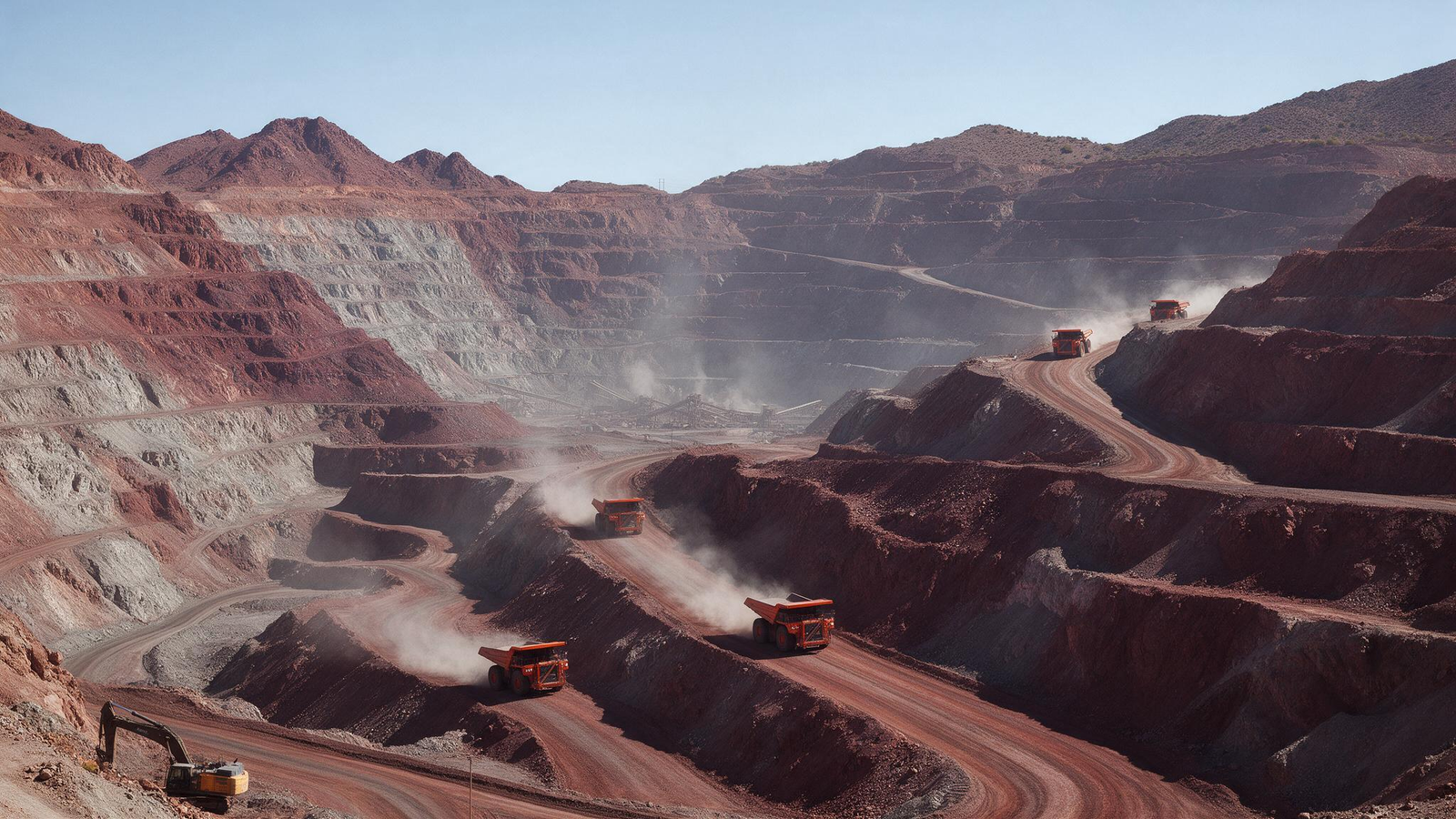
Ore grade is the concept most retail investors underweight, and it deserves a plain-English explanation. A copper mine does not dig up copper. It digs up rock that happens to contain copper, and the percentage of copper in that rock declines as the best ore is mined out first. When grade falls from, say, 0.8 percent to 0.6 percent, the mine must move roughly a third more rock to produce the same tonnage of metal. That means more diesel, more water, more electricity, more truck hours, more tailings storage. Costs climb even when nothing goes wrong, and the mine’s maximum output ratchets down regardless of what the price screen says.
Morgan Stanley analyst Amy Gower ties the current squeeze to a decision made more than a decade ago. When commodity prices collapsed in the mid-2010s, miners slashed exploration and development budgets to defend their balance sheets. Those cuts are arriving now as a thin pipeline of new projects. Permitting timelines being what they are in most jurisdictions, Gower’s view is that efforts to accelerate new mines are unlikely to deliver meaningful supply before 2030. A mine you approve today is a mine your grandchildren’s index fund benefits from.
Weather is stacking on top. Storms in Chile have already disrupted operations, and forecasters expect a strengthening El Niño. Gower notes that mining disruptions have historically run heavier in El Niño years, with Chile exposed directly and operations in the Democratic Republic of Congo and Zambia vulnerable through their dependence on hydropower.
The Congo, for what it is worth, is the bright spot. First-half copper shipments there rose more than 4 percent, carried by Chinese-backed operations including CMOC Group’s Tenke Fungurume and Kisanfu mines. One region growing while the rest of the world contracts is not a balanced market. It is a concentration risk with a friendly face.
Why the warehouse numbers are misleading you
Here is where investors get tripped up. If you pull up copper inventory data, you will see abundance. Combined Comex and LME inventories exceeded 740,000 tons as of early August, with another 110,860 tons sitting in private storage at US ports according to LME data. More than 200,000 metric tons landed in the US in July alone, the biggest monthly inflow on record in IHS Markit shipping data going back to 2014. Comex stocks have climbed more than 40 percent this year to a record, and the total American copper hoard is widely estimated well above a million tons. That looks like a glut.
It is not a glut. It is a relocation. ING described it precisely as a geographic redistribution driven by tariff arbitrage rather than by demand, with metal effectively locked inside the US border while inventories in LME and Shanghai warehouses drained. The world did not make more copper. It moved copper.
There is a second layer that matters. Mine supply and refined supply are different things. Refined copper includes metal recovered from scrap, and smelting capacity has expanded aggressively. Morgan Stanley expects refined production to rise roughly 0.9 percent this year even with mine output flat, because processors short on concentrate are leaning harder on alternative feedstocks. Scrap and spare smelter capacity can paper over a mine problem for a year or two. They cannot manufacture ore.
Washington still has not ruled
The tariff question remains open, which is remarkable given how long it has been pending. Commerce Secretary Howard Lutnick’s June 30 deadline to recommend action on refined copper imports passed without a public announcement. The original proposal on the table calls for a phased duty starting at 15 percent on January 1, 2027 and rising to 30 percent in 2028. Semi-finished copper products and derivatives have carried a 50 percent tariff since August 2025.
ING’s framework for the possible outcomes is useful. Confirmation of the phased tariff would likely lift both benchmarks and widen the Comex premium. A delay compresses the arbitrage but does not send the stockpiled metal home in a hurry, because as long as tariff risk exists, that inventory stays effectively parked. Outright rejection is the bearish case, since it removes the stockpiling incentive entirely. Citigroup’s Tom Mulqueen forecasts $15,000 a ton by year-end with scope toward $17,000 if manufacturing recovers or if energy transition, data center and strategic stockpiling demand runs hotter than expected, and he argues the American inventory pile is likely to unwind gradually rather than dump back onto the global market.
What a thoughtful investor takes from this
Equity markets have already registered an opinion. MINING.COM’s ranking of the 50 largest mining companies gained $357 billion in August, the biggest monthly increase on record, pushing the group back above $2.5 trillion for the first time since February. The twelve copper names in that group added roughly $70 billion, and Freeport-McMoRan rose 20.8 percent in the month.
But notice the tension sitting inside that rally. Freeport and Codelco posted double-digit production declines while prices were setting records. A higher price on fewer pounds is a fundamentally different proposition than a higher price on more pounds, and the two produce very different cash flow profiles over a full cycle. Investors evaluating miners right now are really asking a question about volume, not price: can this company hold or grow its output while the industry average goes backwards?
The forecasts, it should be said, disagree with each other substantially on the supply and demand balance for this year and next. El Niño is a probability, not an event. A tariff ruling in either direction rearranges trade flows within weeks. None of that is settled.
What does look durable is the mine constraint. As Anglo American Chief Operating Officer Ruben Fernandes put it in an interview last week, “Everyone is investing in copper, everyone likes copper.” The complication he added is the one worth sitting with: supply will come, but the question is how quickly. On a ten-year permitting clock, that question answers itself, and it does not answer in copper’s favor.
This article is written for educational and informational purposes only and does not constitute financial or legal advice. The views and analytical frameworks presented draw on publicly available information and reported commentary from industry participants. Readers are encouraged to consult primary sources and form their own informed views on these complex topics.