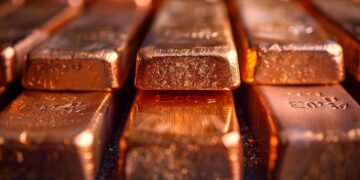
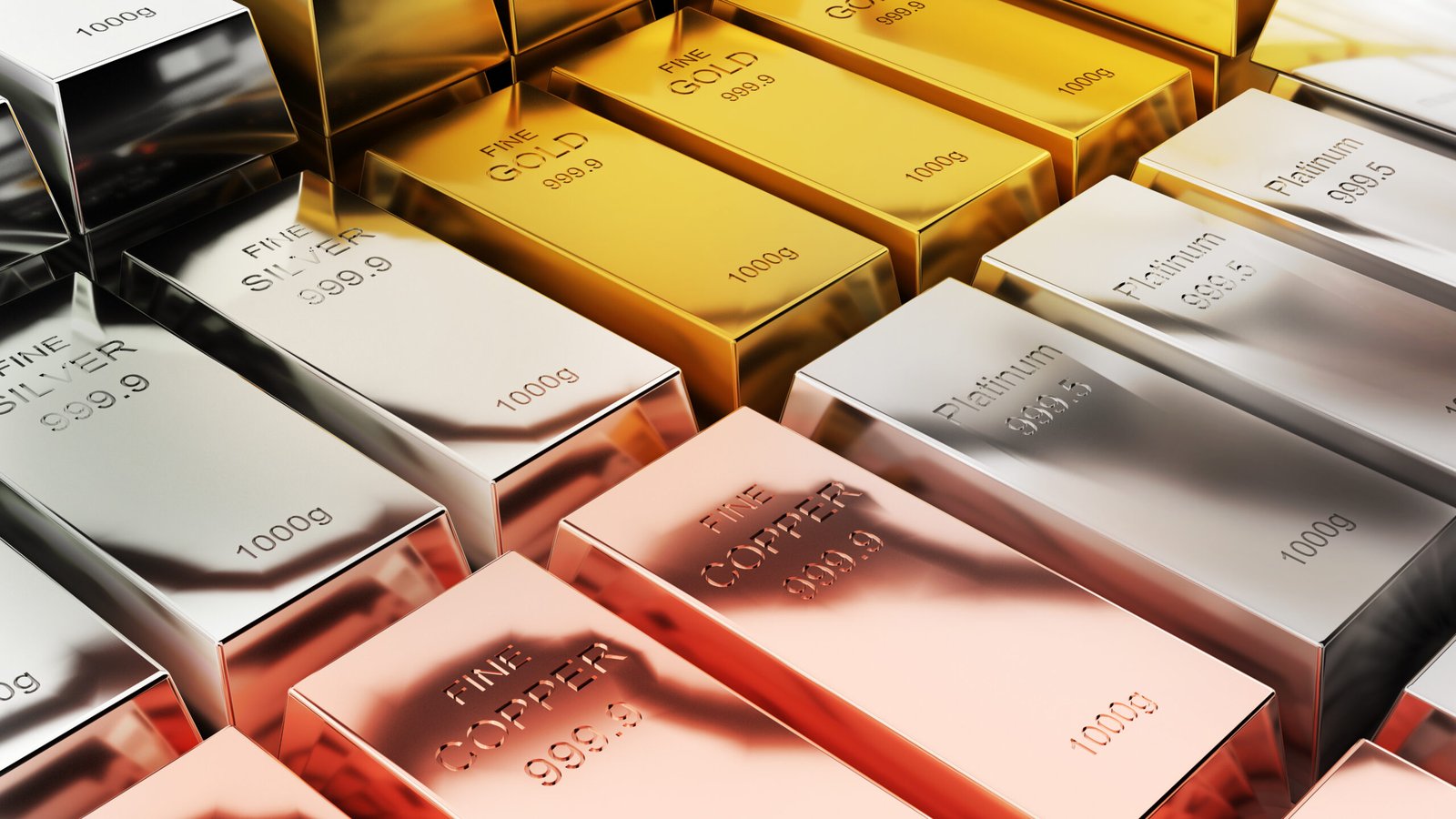
Pull up a chart of the metals complex for 2026 and you would be forgiven for thinking somebody spliced two different years together. Copper is trading around $6.65 a pound, roughly $14,500 a tonne, within shouting distance of an all-time high. Gold is sitting near $4,369 an ounce, about 20 percent below the record close of $5,419.83 it set on January 28, and up something like 0.7 percent for the year. Silver has had it worse. It changed hands near $66.56 an ounce this week against a record of $121.67 set on January 29. Same complex. Same mines, in plenty of cases the same orebodies. One group has round-tripped eight months of gains and the other will not break.
A split like that tempts people into a bad conclusion, which is that one of these markets must be wrong. Neither is. They are priced by two different machines, and 2026 has pulled those machines far enough apart that you can finally see the wiring.
Two Engines, Not One
Gold and silver are monetary assets that happen to be mined. What moves them, most of the time, is the opportunity cost of holding something that pays you nothing. When real yields fall, that cost falls and bullion gets easier to own. When real yields rise, the math turns against it. That is the entire plot of the past few weeks. A global bond selloff drove yields to their highest levels since 2008, traders pushed the odds of a Federal Reserve rate increase this month to nearly 70 percent, and gold fell for three straight sessions into a two-week low. Comex December gold dropped as much as 2.4 percent to $4,374.10, its weakest since August 19. December silver fell as much as 3.2 percent to $64.83 before steadying. Nothing about the supply of gold changed in those three days. The discount rate changed.
Copper does not work that way. Copper is priced in tonnes that either arrive at a smelter or do not. Rate expectations matter at the margin, through the growth channel, but the thing that sets the price is whether the metal physically exists where somebody needs it. And this year it increasingly does not.
Look at the Yangshan premium, the surcharge Chinese buyers pay for physical copper delivered into bonded warehouses in Shanghai. It climbed to $121 a tonne, the highest since November 2022. That is not a sentiment indicator or a positioning survey. It is what a real buyer paid, in cash, to get real metal in hand rather than wait. When that number goes vertical, it is telling you the spot market is short.
The Tonnes That Never Showed Up
Here is the part that should hold your attention longer than any Fed headline. According to International Copper Study Group data, global mined copper output fell 1.1 percent in the first half of 2026, with Codelco and Freeport-McMoRan both posting double-digit declines. Global mine supply has not fallen in a full year since 2017. It is now at real risk of doing exactly that, and it is happening while the price sits near a record. Think about how strange that is. The textbook says high prices call forth supply. The mines are going the other direction.
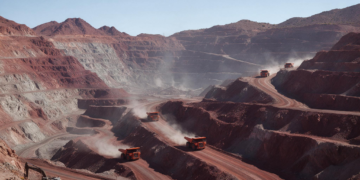
The single biggest hole is Grasberg in Indonesia, the second largest copper mine on the planet. Freeport-McMoRan declared force majeure on supply contracts tied to its Grasberg Block Cave operations after a mud rush incident on September 8 of last year, and guided that 2026 copper and gold output could come in roughly 35 percent below prior estimates. The block cave is working through a phased restart, but the company does not expect pre-incident production levels to return until 2027. Add the problems at Ivanhoe Mines’ Kamoa-Kakula complex in the Democratic Republic of Congo, and a Sprott analysis estimated the two together stripped roughly 600,000 tonnes out of expected 2026 production, about 2.5 percent of annual global mine supply.
Two assets. Two and a half percent of world supply. The International Copper Study Group has warned the refined market swings to a deficit of about 150,000 tonnes in 2026, after a period when the consensus view was comfortable surplus. That is how thin the margin was to begin with.
Why Higher Prices Do Not Fix This Quickly
Every commodity bull market eventually runs into its own cure, because $6.65 copper funds a lot of drilling. The catch is the clock. Bloomberg framed this year’s setback as evidence of how slowly miners can respond to higher prices, and the Grasberg timeline makes the point concrete. A mine that was interrupted last September is not expected back at pre-incident output until 2027. That is the recovery path for an asset that already exists, is already permitted, and is already built. A project that has to be found, drilled, permitted, financed and constructed from scratch is a far longer wait than that.
Meanwhile the existing base keeps getting harder. Ore grades decline as the good rock gets mined first, which means moving more material and burning more diesel and power for the same number of tonnes. Chilean output has been soft. Development costs have climbed. And the industry has spent the better part of a decade being disciplined about capital, which shareholders asked for and which worked exactly as designed, right up until the moment the world wanted more copper.
So what wants more copper? Grid buildout, electrification, renewables, and increasingly data centers, where power distribution, cooling and interconnect all consume the metal in quantity. That demand is not a forecast anyone has to squint at. It is being financed right now.
Does any of that guarantee a price? Of course not. Copper has broken bulls before and China can slow at any time. But the asymmetry is worth naming. Supply is constrained by geology and permitting, both of which move on decade timescales. Demand is constrained by capital, which moves on quarterly ones.
What the Split Means for the Equities
Here is where the divergence gets practical, because the equity side of this business does not map cleanly onto the metal.
An operating miner is a leveraged, fixed-cost bet on a price it does not control. When the metal rallies, margin expands faster than the commodity. When it falls, the same leverage runs in reverse, and costs almost never fall as fast as the price. That is the honest description of why gold producers can underperform bullion badly in a drawdown like this one. It is also why single-asset producers carry a risk that is easy to underweight until a mud rush shuts the mine. Grasberg is a reminder that operational risk is not an abstraction, and that concentration cuts both ways.
Royalty and streaming companies are built to sidestep some of that. They pay cash up front for a slice of future production or the right to buy metal at a fixed cost, then carry almost no operating expense against it. Their exposure is to the price and to whether the mine keeps running, not to whether the operator’s diesel bill went up. That structure tends to hold up better than producers when costs inflate, and it usually spreads exposure across many assets rather than one. The trade-off is real. Royalty holders capture less upside when a mine outperforms, they have no operational control when something goes wrong, and the businesses often trade at premium valuations precisely because the market understands all of that. Neither structure is better. They are different instruments, and knowing which one you own matters most in years like this.
The broader point for anyone holding a mining fund or a handful of tickers is that “metals and mining” is not an asset class. It is at least two, and they are currently disagreeing with each other at high volume. A gold miner and a copper miner share a sector code, a set of permitting headaches and a labor market. They share almost nothing in terms of what actually determines the price of what they dig up. Uranium is arguably a third bucket entirely, with spot moving back above $100 a pound on utility contracting rather than on anything the Fed does.
The Part Worth Sitting With
Gold’s drawdown is a repricing of monetary conditions. It is painful and it is reversible, sometimes fast, because the moment the rate path shifts the math flips back. Copper’s tightness is a repricing of physical reality, and physical reality does not shift on a press conference. The mines are producing less than they did last year. The metal in the warehouse is the metal that exists.
That distinction will not tell you where either price goes next, and anyone claiming otherwise is selling something. It tells you what you are actually exposed to, which is the more useful question and the one that gets skipped. The investor who understood in January that these were two different trades is having a far less confusing year than the one who simply bought “metals.”
This article is written for educational and informational purposes only and does not constitute financial or legal advice. The views and analytical frameworks presented draw on publicly available information and reported commentary from industry participants. Readers are encouraged to consult primary sources and form their own informed views on these complex topics.