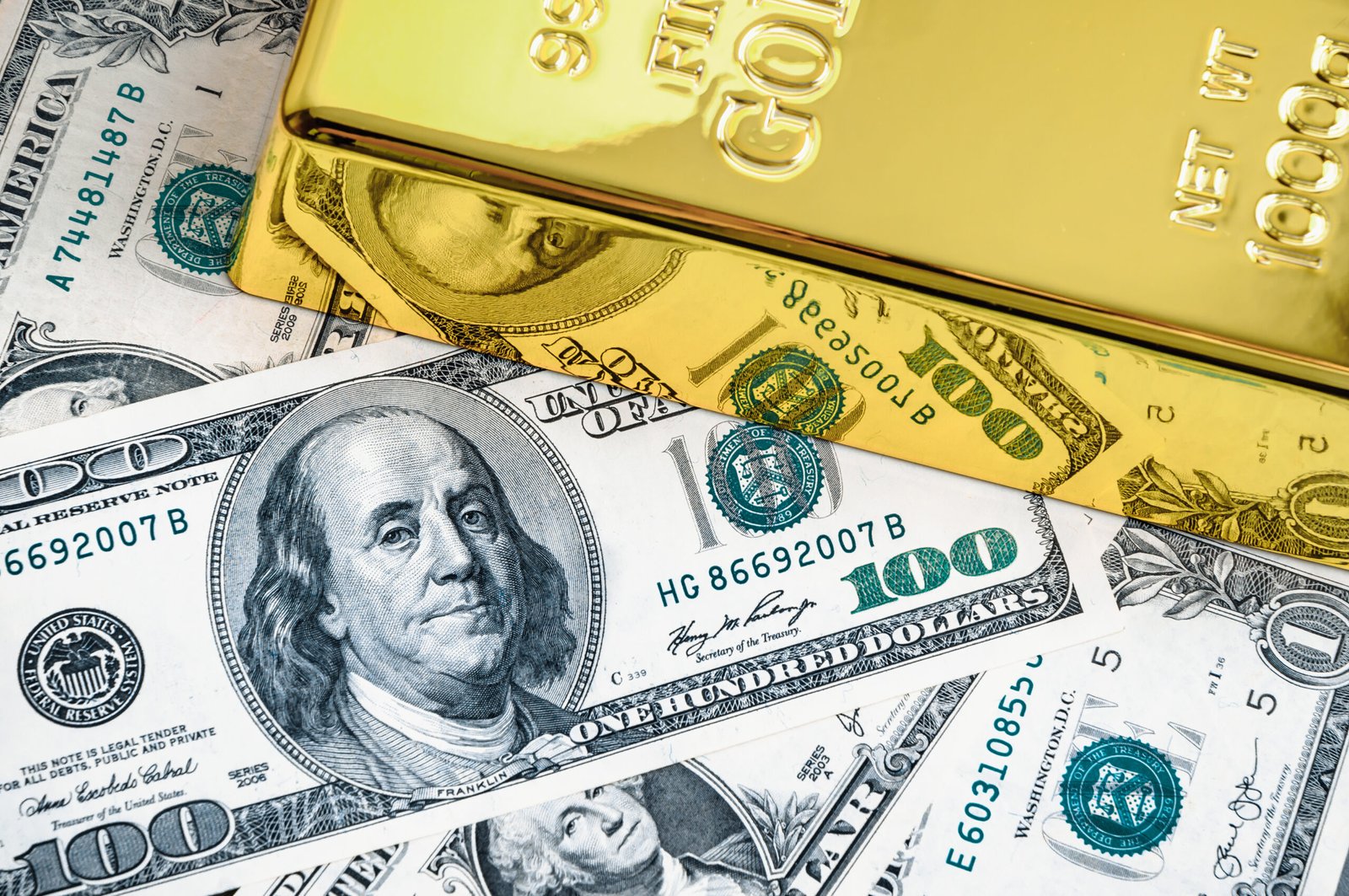
Ask most people what happened to gold in 2026 and you’ll get the same two-part answer: it went up, then it fell out of bed. Both are true, and both matter, but only one of them tells you anything useful about where the metal goes from here. Gold ripped to an all-time high above $5,580 an ounce in late January, then spent the better part of eight months giving a good chunk of that gain back, trading around $4,278 an ounce as of Thursday morning, according to Fortune’s daily price tracker. If you only read the headlines, you’d assume the gold trade had run its course. You’d be wrong, or at least early, because the buyers who actually move this market in size, meaning central banks and Chinese households, never stopped showing up. They just got quieter about it while retail traders were busy panicking about the pullback.
The Comedown After the Mania
Start with the arc, because it explains a lot. Gold opened 2025 around $2,624 an ounce, according to price data compiled by CBS News. By late spring it had cleared $3,500. By the second half of the year it punched through the $4,000 mark for the first time, a level with real psychological weight in a market that had spent most of the prior decade below $2,000. Then came the late-2025 run past $4,500 on a mix of financial market volatility and a broad scramble into hard assets, and finally the parabolic move into January 2026, when gold hit its record of $5,589.38 an ounce on January 28.
That is a genuinely wild run, more than doubling in roughly thirteen months. Nothing goes up in a straight line forever, and gold didn’t. It has since pulled back to the low $4,300s, down about 8.5% over just the past month alone, per Fortune’s tracking, which put the metal at $4,674 an ounce a month earlier. Call it a rounding error and you’re not paying attention. Call it a top and you’re missing the bigger number: even after that drop, gold is still up more than 60% from where it started 2025. A 24% retreat from a record high sounds dramatic on a chart. On a balance sheet, for anyone who bought gold two years ago instead of two months ago, it looks a lot more like digestion than disaster.
The Buyers Who Don’t Chase Headlines
Here’s the part that gets lost when the conversation turns to price alone. Central banks have not stepped back from gold even as the metal cooled off from its January spike. The World Gold Council projects official-sector purchases of roughly 850 tonnes for all of 2026, essentially in line with the approximately 863 tonnes bought in 2025, a year that itself ranked among the strongest on record even though it fell short of the 2022 to 2023 peaks.
Poland has been the standout. The country added about 64 tonnes through May and June alone, its fourth straight month of double-digit tonnage purchases, pushing its total reserves to roughly 614 tonnes as it works toward a stated 700-tonne target. China’s central bank, meanwhile, has now bought gold for 20 consecutive months as of the most recent World Gold Council data, adding around 25 tonnes so far this year. Its total holdings sit near 2,331 tonnes, which sounds like a lot until you realize that’s only about 9% of China’s overall reserves, a far smaller share than most developed economies hold. Uzbekistan and Kazakhstan have kept buying too, while Turkey and Russia trimmed their holdings slightly in May, a reminder that this isn’t a coordinated trade so much as dozens of individual institutions arriving at the same conclusion on their own timelines.
Then there’s China’s private and investment demand, which has been arguably the bigger story of the back half of this year. Chinese gold imports through August 2026 topped 1,000 tons, already exceeding the entire total for 2025, according to customs data reported this week. An analyst at Jinrui Futures pointed to a strong yuan and more generous import quotas from regulators as the mechanism, with onshore gold prices holding at a premium to world benchmarks that keeps incentivizing the flow. When a market that size is pulling in metal at that pace, a cooling headline price in dollar terms doesn’t necessarily mean cooling demand on the ground.
What Central Bankers Themselves Expect
It’s worth taking central bankers at their word here, or at least at their survey response. The World Gold Council’s ninth annual Central Bank Gold Reserves Survey found that 89% of respondents expect global gold reserves to keep rising over the next 12 months, and a record 45% expect their own institution’s holdings to grow. Surveys aren’t commitments, and sentiment can shift fast when budgets tighten or currencies move. But when nearly nine in ten of the people whose job is literally managing sovereign reserves say they expect more buying, not less, that’s a data point worth more than a week of price action on a futures screen.
Why does any of this matter if you’re not a central banker? Because the entire investment case for gold as a portfolio holding rests on the idea that its demand base is diversified and somewhat price-insensitive, rather than dependent on momentum traders piling in during moments of panic. A retail-driven spike can evaporate as fast as it arrived. A multi-year accumulation program run by a national reserve manager generally does not, because the goals behind it, de-dollarization, diversification away from any single reserve currency, insurance against sanctions risk, tend to outlast any single quarter’s price chart.
What It Means for the Rest of the Sector
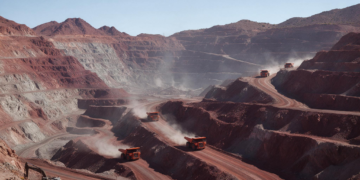
A lower gold price than January’s mania peak still sits well above where most producers need it to be profitable, which means margins across the mining industry remain historically wide even after the correction. That’s relevant whether you’re looking at the major gold producers directly or at the royalty and streaming companies that collect a cut of production without taking on operating risk themselves, a structure that has historically held up better during price pullbacks than the miners do.
Gold isn’t the only place in this sector where the supply and demand math looks unusually tight right now, either. Copper is dealing with its own squeeze, with Morgan Stanley forecasting a roughly 600,000-tonne global deficit for 2026, which the bank has called the largest shortfall in more than two decades, driven by mine disruptions in Chile and Indonesia alongside a sulfuric acid shortage tied to Chinese export curbs. It’s a useful reminder that the metals and mining trade right now isn’t a single story about one metal’s chart. It’s several overlapping stories about physical supply struggling to keep pace with demand, playing out at different speeds across gold, copper, and the rest of the critical minerals complex.
None of that guarantees gold retests $5,600 next month, next quarter, or ever. Markets don’t work on guarantees, and anyone telling you otherwise is selling something. But the case for treating this year’s pullback as a reset rather than a reversal rests on something more durable than chart-reading: the buyers with the longest time horizons and the deepest pockets kept buying through the entire drop.
This article is written for educational and informational purposes only and does not constitute financial or legal advice. The views and analytical frameworks presented draw on publicly available information and reported commentary from industry participants. Readers are encouraged to consult primary sources and form their own informed views on these complex topics.